
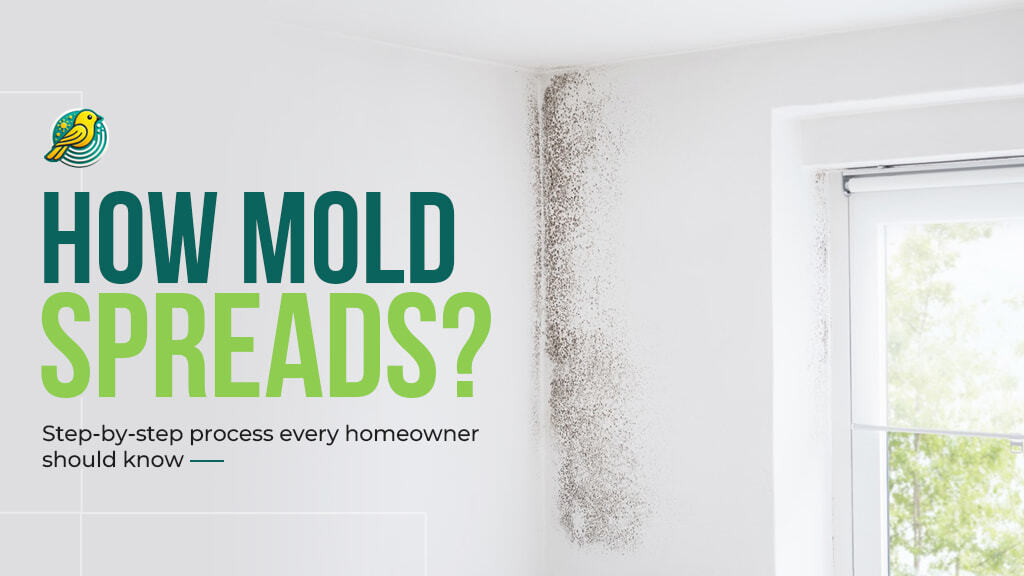
Mold doesn’t just appear overnight — it spreads through a precise, repeatable process that often goes unnoticed until it becomes a serious issue. Understanding how mold spreads is the key to stopping it early, protecting your indoor air quality, and avoiding costly damage.
In this guide, we break down exactly how mold travels, grows, and takes over indoor spaces — step by step.
What Makes Mold So Easy to Spread?
Mold is a naturally occurring fungus that reproduces through microscopic spores. These spores are lightweight, airborne, and constantly present in both indoor and outdoor environments — there’s no such thing as a completely spore-free home.
What makes mold dangerous is how little it needs to grow:
- Moisture
- Organic material (drywall, wood, dust, carpet backing)
- Moderate temperature
Once these conditions are met, mold can begin growing within 24–48 hours. That short window is exactly why understanding the spread process matters: by the time mold is visible, it has often already been active for days.
How Mold Spreads: Step-by-Step Process
1. Spore Release Into the Air
Mold colonies continuously release thousands of microscopic spores into the air as part of their reproductive cycle. These spores are invisible to the naked eye and can circulate throughout your home for extended periods without any detection — there’s no odor or visible sign at this stage.
2. Airborne Movement & Surface Landing
Spores travel through several common pathways: air currents, HVAC systems, open windows and doors, and by attaching to clothing, bags, or pets moving between rooms or even between units in a multi-family building. They eventually settle onto surfaces like walls, ceilings, carpets, and furniture throughout the home — often far from wherever the original colony is located.
3. Moisture Exposure (Trigger Point)
Spores remain dormant until they land somewhere with enough moisture to activate them. That moisture can come from an active leak, elevated ambient humidity, or simple condensation — meaning a spore doesn’t need direct water contact to germinate, just sustained dampness.
4. Germination Begins
Once moisture is present, a spore begins to grow, sending out root-like structures called hyphae that anchor it to the material and start drawing in nutrients. This is the true starting point of a mold colony, even though nothing is visible yet.
5. Colony Expansion
As the colony matures, mold spreads by feeding on organic material in whatever it has landed on. It expands both across the surface and deeper into porous materials like drywall paper and wood, which is part of why mold that looks small on the surface can involve significantly more material than what’s visible.
6. Secondary Spore Release
Once established, the colony begins releasing its own spores, restarting the cycle and giving mold a way to spread to new areas of the property — this is how a single leak under a sink can eventually lead to mold showing up in an entirely different room.
Common Ways Mold Spreads Inside Homes
Mold doesn’t stay in one place. It spreads through multiple pathways:
- Air ducts and HVAC systems distributing spores room to room, sometimes uniformly throughout an entire home
- Water damage from leaks, floods, or roof issues
- High humidity levels in bathrooms, kitchens, and basements
- Contaminated materials like carpets, furniture, or insulation that get moved between rooms
- Cross-contamination from shoes, clothing, or pets
- In apartments and multi-unit buildings, shared walls, ceilings, and plumbing lines can let mold migrate between units
Conditions That Accelerate Mold Growth
Certain environments make mold spread faster:
- Humidity above 50%
- Poor ventilation
- Warm indoor temperatures
- Hidden moisture behind walls or ceilings
- Delayed drying after water damage
The longer these conditions persist, the faster and more extensively mold spreads — which is why addressing moisture quickly matters more than which cleaning product you eventually use on the visible growth.
Signs Mold Is Actively Spreading
Early detection is critical. Watch for these warning signs:
- Musty or earthy odor
- Visible dark, green, or white patches
- Peeling paint or warped surfaces
- Recurring allergies or respiratory irritation
- Past or ongoing water damage
Even if mold isn’t visible, it may still be spreading behind walls or under flooring — odor and health symptoms are often the earliest clues in cases where growth is hidden.
Why Mold Spread Should Never Be Ignored
Unchecked mold growth can lead to:
- Structural damage to walls, ceilings, and flooring
- Poor indoor air quality
- Increased repair costs
- Health concerns like allergies and respiratory issues
- Reduced property value
What starts as a small issue can quickly turn into a widespread contamination problem, particularly if the moisture source isn’t identified and corrected early.
How to Prevent Mold From Spreading
Stopping mold early is much easier than removing it later. Focus on:
- Fixing leaks immediately
- Keeping humidity below 50%
- Improving airflow and ventilation
- Drying water-damaged areas within 24–48 hours
- Regularly inspecting high-risk areas, especially under sinks, around HVAC units, and in bathrooms
Prevention is always more cost-effective than remediation.
When to Call a Professional Mold Inspector
If mold keeps returning or you suspect hidden growth, a professional mold inspection is essential. A certified inspector can:
- Detect hidden moisture sources
- Identify airborne mold spores
- Provide lab-tested results
- Deliver a clear action plan
Final Thoughts: Stop Mold Before It Spreads
Mold spreads silently, quickly, and efficiently. By understanding the step-by-step process, you can take control early and prevent serious damage.
At The Mold Inspection Canary, we specialize in unbiased, inspection-only services across Los Angeles, Santa Monica, Malibu, Beverly Hills, Manhattan Beach, Pasadena, and surrounding areas. We do not perform remediation, which means you get honest results, accurate testing, and no conflict of interest.
If you suspect mold in your home, don’t wait — early detection through professional mold inspection services can save you thousands in repairs and help protect your health.
FAQs
How quickly does mold spread in a home?
Mold can begin growing within 24 to 48 hours when moisture is present. Once it starts, it spreads by releasing spores into the air. These spores settle on new surfaces and create additional colonies. Without moisture control, growth can become widespread very quickly.
Can mold spread through the air?
Yes, mold spreads primarily through airborne spores that travel easily throughout indoor spaces. These spores can move through HVAC systems, open windows, and even attach to clothing or pets. Once they land on damp surfaces, they begin growing. This is why mold can appear in multiple rooms.
Does mold spread if it is dry?
Mold spores can survive in dry conditions but remain inactive without moisture. They do not grow or spread actively until they come into contact with damp surfaces. However, once moisture returns, they can quickly become active again. This makes moisture control critical.
Can cleaning visible mold stop it from spreading?
Cleaning surface mold may remove visible growth, but it does not address hidden moisture or airborne spores. Mold can still exist behind walls or in unseen areas. Without proper inspection and testing, the problem may return. Professional assessment ensures complete detection.
Can mold spread from a neighboring unit in an apartment or condo?
Yes — in multi-unit buildings, mold can migrate through shared walls, ceilings, and plumbing chases, especially where a leak or high humidity in one unit affects an adjoining space. If you’re noticing mold-like symptoms or odors but can’t find a source in your own unit, it’s worth considering whether an adjacent unit could be contributing, which a professional inspection can help identify.
When should I get a mold inspection?
You should schedule an inspection if you notice persistent odors, visible growth, or recent water damage. It is also recommended during real estate transactions or if health symptoms appear. Professionals can detect hidden mold and identify moisture sources. Early inspection prevents costly damage later.
