
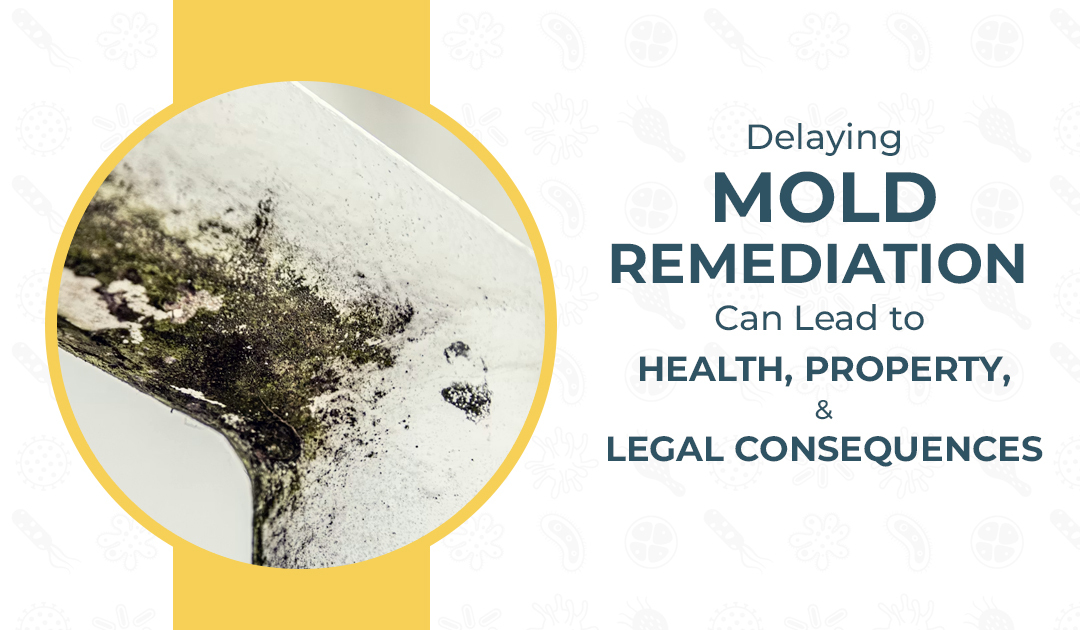
Finding mold in your home or property usually starts with scheduling a professional mold inspection before deciding on remediation.
The repair estimates are higher than expected. The insurance claim is still being processed. The remediation company can’t schedule for two weeks. Life gets in the way.
So you wait.
It feels like a reasonable decision. But with mold, delay is one of the most expensive choices you can make — measured not just in dollars, but in structural damage, health consequences, and legal exposure that compound with every week that passes.
This guide walks through exactly what happens when mold remediation is postponed, why the costs escalate so predictably, and what the right response looks like in 2026.
Why Mold Moves Fast — Even When You Can’t See It
Understanding why delay is so costly starts with understanding how mold behaves.
Mold requires two things to grow: moisture and a nutrient source. In buildings, the nutrient sources are everywhere — drywall paper, wood framing, insulation, carpet backing, ceiling tiles, and HVAC insulation all provide the organic material mold needs to feed on.
If moisture damage is suspected, an independent mold assessment helps determine how far contamination has spread before remediation begins.
Once moisture is introduced — through a pipe leak, roof intrusion, HVAC condensation, flooding, or even persistent high humidity — mold can begin establishing colonies within 24 to 48 hours. Not days. Not weeks. Hours.
The critical point: by the time mold becomes visible on a surface, it has almost always been growing inside that material — and often in adjacent materials — for far longer. What you see on a wall is rarely the full extent of what’s happening behind it.
Common moisture sources that trigger mold growth:
- Slow plumbing leaks under sinks, behind walls, or in slab foundations
- Roof leaks — even minor ones that only manifest during heavy rain
- HVAC condensate drain overflow or air handler moisture
- Window and door frame leaks during storms
- Exterior moisture intrusion through foundations or cladding
- Flooding or storm water intrusion
- Appliance failures (dishwasher, refrigerator water line, washing machine)
- Inadequate ventilation causing chronic condensation
Every day a moisture source remains unaddressed is another day mold extends its reach into building materials that were previously unaffected.
Consequence #1: The Scope of Damage Grows — Exponentially, Not Linearly
The most direct cost of delay is the expansion of contaminated material.
Mold doesn’t stay contained. It spreads through building materials along moisture gradients — moving from the initial moisture source into adjacent drywall, insulation, wood framing, and flooring. It also spreads through the air, with spores traveling through HVAC systems, wall gaps, and normal air movement to colonize new areas.
How Scope Expands Over Time
Within 24–48 hours: Mold begins establishing on wet porous materials. Carpet padding exposed to water is typically unsalvageable within the first day if not professionally dried.
Within 1–2 weeks: Active growth spreads through drywall and insulation. Materials that could have been dried and preserved now require removal and replacement. Structural wood begins showing signs of moisture saturation.
Within 1–3 months: Mold penetrates deeper into structural components. Adjacent rooms begin showing elevated spore counts. HVAC systems may become contaminated, distributing spores throughout the entire property.
Beyond 3 months: Structural wood may show signs of deterioration from fungal enzyme activity. Multiple infiltration points become difficult to isolate as contamination spreads. Remediation scope — and cost — has multiplied from what it would have been at 24–48 hours.
The Materials at Stake
Certain building materials are particularly vulnerable to progressive damage:
Drywall — a primary food source for mold. Once mold penetrates drywall, the paper backing is consumed rapidly. What begins as a small affected area expands through the material and into the wall cavity behind it.
Wood framing — specific mold species, including Chaetomium and Ulocladium, produce enzymes that actively break down cellulose in wood. Extended exposure can cause genuine structural wood rot, compromising the integrity of wall systems, floor joists, and roof framing.
Insulation — fiberglass and cellulose insulation both absorb moisture and support mold growth. Contaminated insulation cannot be cleaned and must be replaced entirely.
HVAC components — air handlers, duct lining, and coil insulation are vulnerable to mold colonization. Once mold establishes in an HVAC system, it actively distributes spores throughout every room the system serves, every time it runs.
Subfloor and flooring — wood subfloor exposed to moisture swells, buckles, and becomes structurally compromised over time. The longer the delay, the more flooring and subfloor material requires replacement rather than drying and preservation.
The remediation math is straightforward: a job that costs $1,500 at week one can become a $15,000 project by month three — not because the remediator’s rates changed, but because the scope of contaminated material tripled or quadrupled.
Consequence #2: Health Risks Escalate with Duration of Exposure
Mold is a well-established health hazard. But the health consequences of mold exposure aren’t static — they accumulate with duration and concentration of exposure, and they affect different people very differently.
Common Symptoms of Mold Exposure
For most people, mold exposure produces allergic-type responses:
- Persistent nasal congestion, runny nose, and postnasal drip
- Chronic coughing, sneezing, and throat irritation
- Red, itchy, or watery eyes
- Skin irritation or rashes
- Headaches and fatigue that improve when away from the property
Elevated Risk Groups
For certain populations, the health stakes are significantly higher:
People with asthma — mold is a recognized asthma trigger. The American Lung Association has documented that asthmatic individuals with mold allergies experience reduced lung function and are at elevated risk of serious complications during mold exposure episodes.
Children — developing immune and respiratory systems are more vulnerable to the effects of mycotoxins and elevated spore concentrations. Children exposed to mold in the home show higher rates of respiratory illness and new-onset asthma development.
Elderly individuals — reduced immune function makes older adults more susceptible to fungal infections and more severely affected by respiratory inflammation from mold spore exposure.
Immunocompromised individuals — people receiving chemotherapy, living with HIV/AIDS, or taking immunosuppressive medications face risk of serious invasive fungal infections from prolonged exposure to certain mold species.
Individuals with pre-existing respiratory conditions — COPD, chronic bronchitis, and other lung conditions are significantly worsened by mold exposure.
The Species That Matter Most
Not all mold poses the same health risk. Some species carry more clinical significance than others:
Stachybotrys chartarum (black mold) — produces mycotoxins linked to severe respiratory symptoms, chronic fatigue, neurological effects, and immune suppression with prolonged exposure. Grows on drywall and cellulose materials when chronic moisture is present.
Chaetomium — another mycotoxin producer associated with nail infections, skin lesions, and neurological effects in sensitive individuals. A reliable indicator of sustained water damage.
Aspergillus — several species within this genus are opportunistic pathogens capable of causing serious lung infections (aspergillosis) in immunocompromised individuals.
Penicillium — spreads rapidly on water-damaged materials and produces allergens that trigger significant respiratory reactions.
The longer remediation is delayed, the higher the spore concentrations in the living environment — and the more serious and cumulative the health exposure becomes.
Consequence #3: Legal and Financial Liability Grows Every Day
This is the consequence most property owners don’t think about until they’re already facing a dispute.
Landlord Liability
California law classifies mold as a habitability issue. Landlords are legally required to maintain rental units in a condition fit for habitation — and mold that poses a health risk violates that standard.
When a tenant reports mold and the landlord delays remediation, the legal exposure compounds with every day of inaction:
- Tenants may be entitled to rent reduction or withholding for uninhabitable conditions
- Tenants may have grounds to terminate the lease without penalty
- Landlords who knowingly delay remediation face personal injury claims if tenant health is affected
- California courts have established precedent for significant damages in mold-related habitability cases
Documentation of when a landlord was notified and when they acted — or failed to act — is the foundation of most tenant mold claims. A landlord who receives written notice of mold and delays response for weeks or months is in a far weaker legal position than one who responds promptly.
Home Seller Disclosure Obligations
California requires sellers to disclose known material defects, including mold. A seller who discovers mold before listing, delays remediation, and sells without disclosure faces potential post-sale litigation from the buyer.
Even if mold was previously remediated, disclosure of the history — and documentation of the remediation — is the legally protected path. Attempting to conceal mold history through delay and non-disclosure is the scenario that leads to lawsuits.
Commercial Property Liability
Commercial landlords face additional regulatory exposure. OSHA and EPA standards govern indoor air quality in commercial settings, and employers have legal obligations to maintain safe working environments. A commercial property owner who delays mold remediation after being notified of the problem has documented their own negligence.
Insurance Claim Consequences
Insurance companies impose prompt notification requirements as a condition of coverage. Policyholders who discover mold — or the water damage likely to cause it — and delay reporting the claim risk having coverage denied on the basis of late notice and failure to mitigate.
Most homeowner policies that cover mold (typically from sudden, covered events like burst pipes) require the policyholder to take reasonable steps to prevent further damage. Delay is the opposite of mitigation — and insurers use that argument to limit or deny claims.
Consequence #4: Hidden Sources Become Harder to Find
One of the most practical — and frustrating — consequences of delayed remediation is what happens to the forensic trail.
When mold remediates promptly, identifying the moisture source is usually straightforward. A thermal imaging scan and moisture meter readings point clearly to the intrusion point: a leaking pipe, a failed window seal, an inadequate vapor barrier.
When mold has spread over weeks or months, multiple secondary moisture pathways develop. Water follows the path of least resistance through building materials, appearing in locations far from the original source. Hidden mold in wall cavities can be feeding from multiple infiltration points that are nearly impossible to isolate without extensive investigation.
This matters for remediation because fixing the moisture source is required for remediation to hold. If the source isn’t identified and repaired, mold will return regardless of how thoroughly the contaminated materials are removed. Delayed remediation often means more expensive investigation, more invasive material removal to trace the moisture pathway, and higher probability of mold returning after remediation.
Consequence #5: Property Value and Marketability Are Affected
Mold has a documented impact on property values — estimates from real estate studies suggest mold can reduce a property’s resale value by 20–37% depending on the extent of contamination and the history of remediation.
Beyond sale price, mold creates significant marketability challenges:
- Home inspectors are increasingly likely to identify and flag mold evidence during buyer inspections
- Buyers who discover mold during due diligence frequently use it as grounds to renegotiate or walk away
- Lenders may decline financing for properties with active mold issues
- Title and escrow timelines can be disrupted by mold discoveries that require remediation before closing
A well-documented, promptly remediated mold event — with post-remediation clearance testing and a written clearance letter — is a far better position than an ongoing mold problem discovered during sale. Delay converts a manageable event into a deal-killing disclosure.
The Right Response: What Prompt Mold Remediation Actually Looks Like
The correct process, executed promptly, follows a specific sequence that protects your property, your health, and your legal position.
Step 1: Independent Assessment First
Before any remediation begins, an independent mold assessment — performed by a certified inspector with no financial stake in remediation — documents the type, extent, and source of mold contamination. This assessment produces a remediation protocol: a written scope of work that defines what the remediation company should do.
This step protects you from scope inflation — a remediator who also performs the inspection has an incentive to expand the scope. An independent assessor doesn’t.
Step 2: Moisture Source Identification and Repair
No remediation holds if the moisture source isn’t fixed first. Your assessment should identify the moisture intrusion point. Plumbing, roofing, or structural repairs must be completed before or concurrent with remediation.
Step 3: Professional Remediation with Containment
Qualified remediators establish containment — negative air pressure, polyethylene barriers — to prevent spores from spreading to unaffected areas during removal. HEPA vacuuming, physical removal of contaminated materials, and antimicrobial treatment are performed according to the remediation protocol.
Step 4: Structural Drying
Industrial dehumidifiers and air movers verify that building materials reach acceptable moisture levels before walls are closed. This step is what prevents recurrence.
Step 5: Post-Remediation Clearance Testing
Your independent inspector returns after remediation is complete to collect air and surface samples. Results confirm that spore levels have returned to normal, problem species are no longer elevated, and the scope of work was completed correctly. A written clearance letter documents the property has achieved acceptable indoor air quality.
This clearance letter is your insurance documentation, your legal protection, and your assurance that the work was done right.
The Mold Inspection Canary: Independent Assessment in Los Angeles
At The Mold Inspection Canary, we provide the independent mold assessment that makes prompt, effective remediation possible.
We serve homeowners, landlords, property managers, and commercial property operators across Los Angeles, Santa Monica, Beverly Hills, Venice, Malibu, Manhattan Beach, Marina del Rey, Hermosa Beach, and surrounding areas.
As an assessment-only company, we never perform remediation. That means every finding we document is unbiased — our only job is to give you an accurate, complete picture of what’s in your property, and a remediation protocol that any qualified contractor can execute.
When mold is found, every day of delay increases the damage, the health exposure, the legal risk, and the remediation cost. The fastest path to resolution starts with knowing exactly what you’re dealing with.
Call 310-567-1160 or book your assessment at themoldinspectioncanary.com.
Frequently Asked Questions: Mold Remediation
1. How quickly does mold spread after water damage?
Mold can begin establishing colonies within 24 to 48 hours of a moisture event on porous building materials like drywall and wood. Within one to two weeks of untreated moisture, active mold growth will typically spread into adjacent materials. Within one to three months, contamination can extend into structural components and HVAC systems. The earlier professional assessment and remediation begin, the smaller the scope of affected material — and the lower the remediation cost.
2. What is the difference between mold remediation and mold removal?
These terms are often used interchangeably, but remediation is the more accurate description of professional mold abatement. “Mold removal” suggests mold can be completely eliminated from an environment, which isn’t accurate — mold spores exist everywhere naturally. Mold remediation refers to reducing mold concentrations to normal background levels, removing contaminated materials, addressing the moisture source, and verifying through post-remediation testing that the environment has returned to safe, pre-loss conditions.
3. Does homeowners insurance cover mold remediation costs?
Coverage depends on the cause of the mold and your specific policy. Insurance typically covers mold remediation costs when mold results from a sudden, covered event — a burst pipe, appliance failure, or storm damage already covered by the policy. Mold from slow leaks, poor maintenance, chronic humidity, or neglect is generally not covered. Most policies cap mold coverage between $10,000 and $25,000 regardless of actual remediation cost. An independent mold assessment report is required by most insurers to validate the scope of a remediation claim.
4. Can I stay in my home during mold remediation?
It depends on the scope and location of contamination. For small, contained remediation jobs in isolated areas — a single bathroom, a section of basement — occupancy with proper containment in place may be acceptable. For larger projects, widespread contamination, or when HVAC systems are involved (which can distribute spores throughout the living space), temporary relocation during active remediation work is typically recommended. Your inspector and remediation contractor should address occupancy specifically during scope planning.
5. How do I know if mold remediation was done correctly?
Post-remediation clearance testing — performed by an independent inspector, not the remediation company — is the only reliable way to confirm the work was done correctly. Air and surface samples taken after remediation are compared to your original inspection baseline and to current outdoor levels. Results showing indoor spore concentrations have returned to normal background levels, and that the problem species are no longer elevated, confirm successful remediation. Your inspector should issue a written clearance letter that can be used for insurance documentation and real estate disclosure purposes.
6. What legal obligations do landlords in California have regarding mold?
California law classifies mold as a habitability issue under Civil Code Section 1941. Landlords are legally required to maintain rental properties free from conditions that materially affect tenant health and safety — including mold that poses a health risk. When a tenant reports mold in writing, landlords have an obligation to investigate and remediate promptly. Failure to act after receiving notice exposes landlords to claims for rent reduction, lease termination without penalty, and personal injury damages if tenant health is affected. California Health and Safety Code Section 17920.3 specifically identifies visible mold as a substandard building condition.
